What does a full-day charter get you?
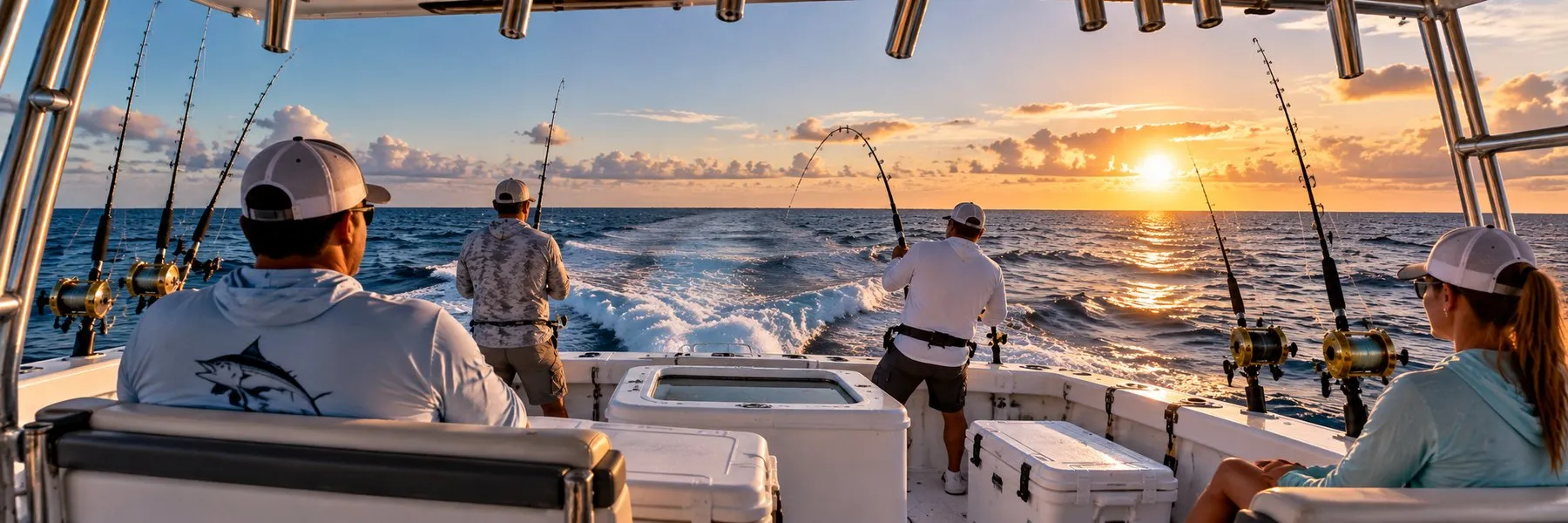
A full day is commonly eight to twelve hours dock to dock, and the hours buy distance. The boat reaches structure that shorter trips cannot, stays longer on productive spots, and can target species that do not come close inshore. It is a demanding day, not simply a longer one.
Nobody gets off early
This is the part I would weigh before booking a long trip, because it is never in the listing. Once the boat is out, you are out. If somebody in your group goes green two hours into a ten-hour day, they are green for eight more hours, and everyone aboard experiences that day differently from then on.
I have watched it happen more than once on Northeast boats. It is never the fishing that ruins a long trip. It is somebody who should have booked four hours instead of ten.
Hours convert into range, and range into fishing
Everything a full day offers follows from the mechanism described in how far offshore these boats run. Nearer structure gets worked by everyone. Further structure sees fewer lines. A long trip spends its extra hours crossing that gap, so it is not a more generous version of the half day — it is access to different water.
There is a subtler benefit too. Short trips are fragile. One slow stop on a four-hour trip is a large fraction of the day. A ten-hour trip can write off a bad spot, move, and still salvage the trip.
What the day costs you physically
Ten or twelve hours of sun, glare and motion is genuinely tiring, and it is worth planning for rather than discovering. The people who finish a long day well are the ones who ate something, drank more water than they thought they needed, and stayed out of the cabin. Sun exposure over that long is more serious than most visitors expect, and dehydration makes seasickness worse.
What to bring covers this properly, and it is the page to read before a long booking rather than after.
Half day or full day?
| Half day | Full day | |
|---|---|---|
| Typical length | Four to six hours dock to dock | Eight to twelve hours dock to dock |
| Range | Nearer structure the boat can reach and return from | Structure a short trip cannot reach |
| Time actually fishing | Run time eats a large share of it | Run time is a smaller share of the day |
| A slow start | Can define the whole trip | Absorbed — there is time to move and try again |
| Cost per hour | Higher — fixed costs do not halve | Lower, but a larger total |
| Suits | Families, first-timers, uncertain sea legs | People who travelled here to fish |
| The constraint | Shorter exposure if the forecast is marginal | Nobody gets off early |
With young children aboard, with anyone unsure about motion sickness, or when fishing is one item on a holiday rather than the reason for it, read what fits into a half-day charter instead. Booking the long trip out of ambition is how people end up enduring a day rather than enjoying it.
Private or shared
Full days run both ways. A shared party boat full day is the economical route for one or two anglers who want the range. A private charter gives the group control over how the long day is spent, which matters more across twelve hours than across four.
Booking ahead
Full-day slots on good boats fill earliest, particularly when a headline season is open — see best time to go. If the trip is the reason for the holiday, book it before anything else and build a spare day in for weather.
What this page will not tell you
Full-day charter questions
How long is a full-day charter?
Typically eight to twelve hours dock to dock, with the exact block set by the operator. Longer trips exist, and the longest offshore runs are sold as overnight or extended trips rather than as a single day.
What does a full day let you do that a half day does not?
Reach further structure, stay longer on productive spots, and fish for species that do not come close inshore. It also absorbs a slow start: on a short trip a bad first stop can define the day, while a long trip has time to move and try again.
Is a full day too much for children?
Often, yes. Ten hours offshore with no option to return early is a long time for an adult, and seasickness is far harder to manage when nobody can leave. Most families are better served by a half day or an inshore trip.
Do you need to be experienced?
No. Crews routinely take complete beginners on full-day trips and set the tackle up accordingly. Stamina and seasickness are the real prerequisites, not skill — a long day in sun and swell is physically demanding regardless of how well you fish.
What happens if the weather turns mid-trip?
The captain decides, and that decision is not negotiable. Coming in early on a deteriorating forecast is a normal, correct call. Ask before booking how the operator handles refunds or credit in that situation, because policies vary.
Next step
Looking for fishing trips in Gulf Shores or Orange Beach?
Fishing Charters Gulf Shores is an independent guide — no boats, no bookings, nothing to sell. It exists so you can ask better questions before you hand an operator a deposit.
Fishing Charters Gulf Shores takes no bookings and earns nothing from a click. You book with the operator directly.