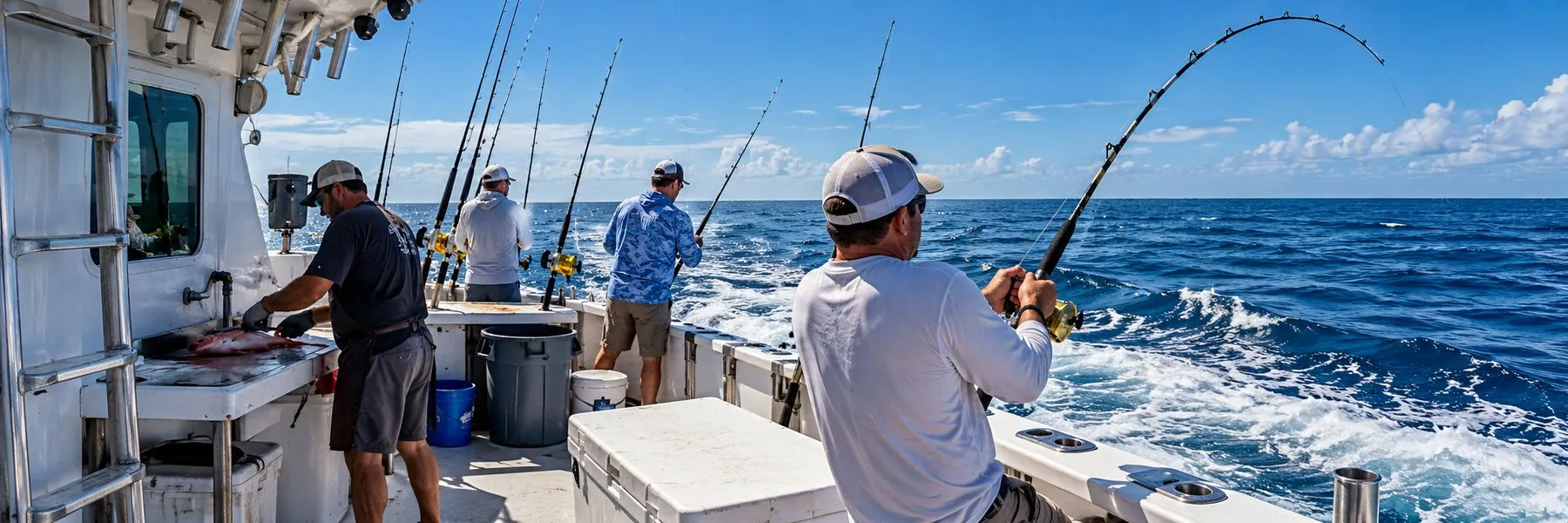
How a Gulf Shores fishing charter actually runs, from booking and dock call through the trip itself to the fish cleaning table and the gratuity.
How does a Gulf Shores fishing charter day actually work?
You book ahead with a deposit, arrive at the marina before a stated dock call, and the boat leaves on schedule. The crew rig everything and run the fishing. Back at the dock they clean your catch, and a gratuity for the crew is customary at the end.
1
Booking
Ahead, usually with a deposit. Read the cancellation and weather policies before you pay — they are not the same thing.
2
The day before
Confirm the dock call time and the marina. Take seasickness medication the night before if you need it.
3
Dock call
Arrive before the departure time, not at it. Parking at a busy marina takes longer than people plan for.
4
Running out
Dead time for you, working time for the crew. Stay outside and watch the horizon if you are prone to seasickness.
5
Fishing
A sequence of stops offshore, or more movement and casting inshore. The crew direct when to drop and when to reel up.
6
Back at the dock
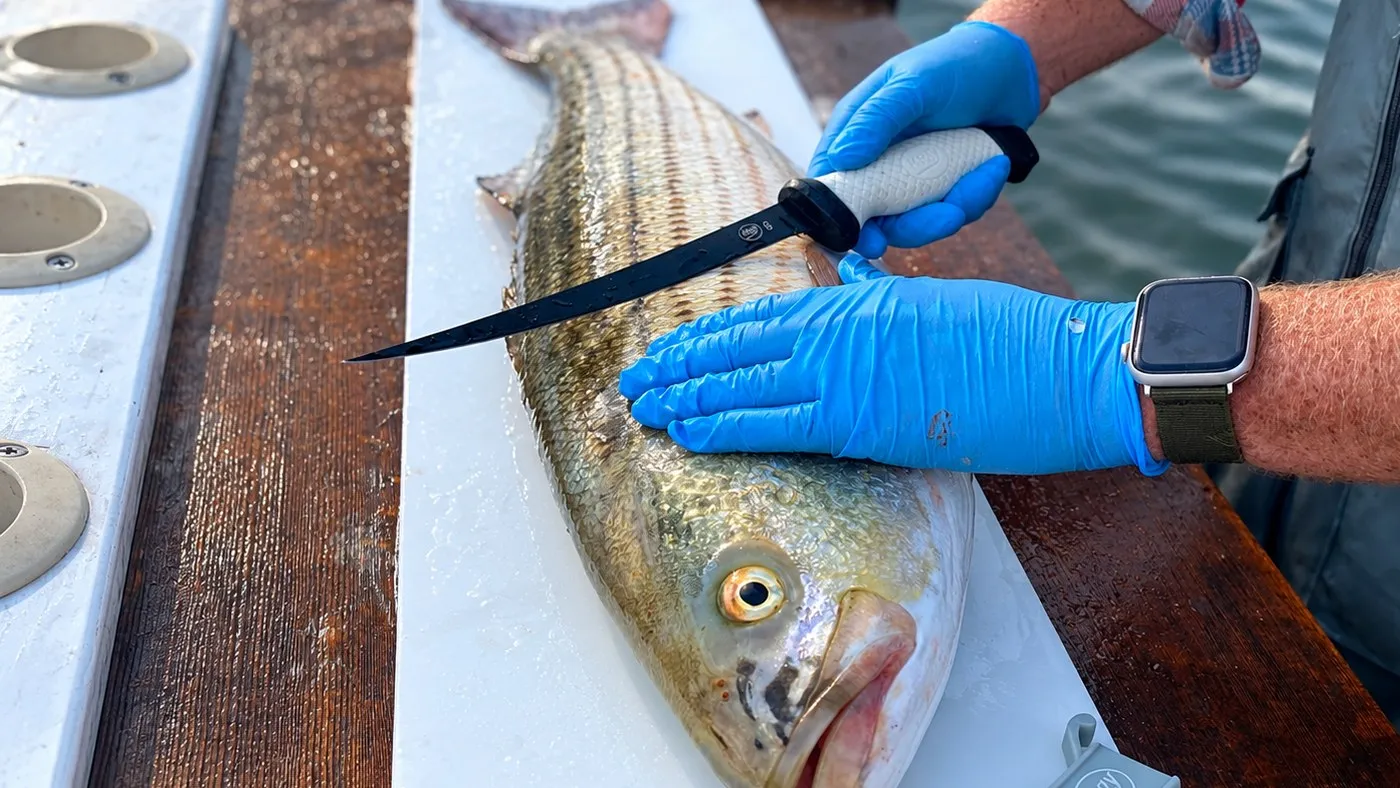
The crew clean and fillet the catch. You leave with fillets rather than whole fish, so bring a cooler.
7
Gratuity
Tipping the mate and crew is customary in US charter fishing. Ask the operator what is usual on their boat.
1. Booking
Charters are booked ahead, usually with a deposit. Good boats and good
dates go early, and whichever season is open that year drives demand hard.
The terms worth reading before you pay are the cancellation policy and the
weather policy — they are not the same thing, and offshore trips get
weathered out often enough that the distinction matters.
2. The day before
Confirm the dock call time and the marina. Buy anything you need then
rather than at 5am. If anyone in the group is prone to motion sickness,
medication generally needs to be taken the night before or well before
departure to work — taking it once you feel unwell is largely too late.
3. Dock call
You arrive before the departure time, not at it. Parking at a busy marina
on a summer morning takes longer than people plan for. Boats leave on
schedule; a missed departure is generally not refundable.
I have never once regretted being early to a boat, and I have watched
people miss one. The dock is also where you pick your spot at the rail,
which matters more than it sounds — see
what the day is like on a shared boat.
4. Running out
The run to the grounds is dead time for you and working time for the crew,
who will be rigging rods and cutting bait. On an offshore trip this can be
a substantial part of the day — the point made in
half-day charters about run time is worth
re-reading before you compare trips. It is also when seasickness announces
itself, so it is a good stretch to be outside, looking at the horizon,
rather than below.
Nobody talks much on the run out. That is normal, and it is the part
first-timers find strangest — you have got up in the dark, you are excited,
and then there is an hour of engine noise and nothing happening. Use it.
Get your drag set, ask the mate anything you want to ask, and stay in the
air.
5. Fishing
Offshore, expect a sequence of stops on structure with the crew directing
when to drop and when to reel up. Inshore, expect more movement and more
casting. In both cases the crew do the technical work: rigging, baiting,
unhooking, and identifying what you have caught.
Every fish gets checked against current size and bag limits. Things you
catch will go back, sometimes things you very much wanted to keep. That is
the law working as intended, and arguing with a mate about it does not
change the outcome.
The single most useful habit I ever picked up was dropping when told and
reeling up when told, rather than a minute later. On a boat where everyone
fishes the same water at the same time, the person still down when the
others are up is the reason six lines end up in a knot.
The tackle is theirs, not yours
This is worth setting expectations on, because it surprises people who
have fished from a bank or a small boat and are used to choosing. Rod,
reel, line, hooks, weights and bait all come from the boat, rigged the way
the crew rig them. On the boats I fished, the rods came out of the rack
ready, the mate set the drag, and nobody asked my view on any of it.
That is the right arrangement, and it is most of what you are paying for.
The crew fish that water every day, they know what the tackle has to
survive, and a boat where fifteen people each ran their own setup would
spend the day untangling instead of fishing. If you want to understand
what the gear is for rather than direct it, ask the mate — that is a
conversation most of them enjoy having, and the run out is the time for it.
What the crew will not do is explain their bait choice as though it were
up for debate. What the fish here eat is published and checkable, and
the species guide quotes it per species. What
goes on the hook on the day is the crew's call.
6. Back at the dock
The crew clean and fillet the catch, generally at a cleaning station at the
marina. You leave with fillets, not whole fish. Bring a cooler if you plan
to keep anything — see what to bring. Whether
cleaning is included or charged is set per operator.
7. Gratuity
Tipping the crew is customary in US charter fishing. The mate does the
physical work of the day and it is normal for the tip to reflect that. If
you would rather not guess at an amount, ask the operator what is usual on
their boat when you book — nobody will find the question strange.
Worth saying plainly: the mate does the physical work of your day. Baiting,
untangling, unhooking, gaffing, cleaning. On the boats I fished, the ones
who tipped well were the ones who had watched what the mate actually did
for six hours.
Things that surprise first-timers
How much of the trip is running rather than fishing.
How much stronger the sun is on the water than on the beach.
That you cannot come back early on a shared boat.
That the crew, not you, decide what is legal to keep.
That there is very little shade on most boats.
How long the run out feels the first time, and how quiet it is.
That your spot on the rail is not the same as everybody else's.
None of those are complaints. They are just the things I would have liked
somebody to tell me before my first trip, and none of them appear in a
booking listing.
Getting the catch home
The crew clean and bag your fish. Keeping it cold between the dock and a freezer is the part nobody plans, and it is usually solved badly in a supermarket car park on the way back.
[SLOT: image — card 4 / 3]Hard coolerProduct image. Owner-supplied or from the affiliate feed — never a manufacturer render passed off as a photograph of the item in use.
Hard cooler — demo listing
For the drive home rather than the boat. The crew clean and bag your catch; getting it back to a freezer still cold is your problem, and it is the one people solve in a supermarket car park.
Placeholder listing — no affiliate programme is in place yet.
[SLOT: image — card 4 / 3]Insulated fish bagsProduct image. Owner-supplied or from the affiliate feed — never a manufacturer render passed off as a photograph of the item in use.
Insulated fish bags — demo listing
Pack flat, hold a filleted catch, and take up no room in luggage on the way down. A sensible alternative to buying a cooler you then have to fly home with.
Placeholder listing — no affiliate programme is in place yet.
Charter day questions
Is charter fishing safe?
Licensed charter vessels carry required safety equipment and are subject to inspection, and the captain holds the authority on the water. The real risks on a normal trip are sun, dehydration, seasickness and the ordinary hazards of a moving deck with hooks on it. The crew brief you; the sensible thing is to listen.
How early do you need to be at the dock?
Earlier than the departure time, and the gap is set by the operator rather than by convention. Boats leave on schedule and will not wait, so treat the stated dock call as a hard deadline and add time for parking, which is often the part people underestimate.
Who cleans the fish?
The crew usually clean and fillet at the dock, either included or for a fee depending on the operator. You leave with fillets in a bag or cooler rather than whole fish. If you want the carcass or the head for any reason, say so before they start.
Do you tip the crew?
Tipping the mate and crew is a normal and expected part of charter fishing in the United States. The amount is between you and your sense of the trip. Ask the operator what is customary for their boat if you would rather not guess.
What happens if someone gets seasick?
The crew have seen it many times and will help, but the boat does not usually turn back for it. This is why trip length is the most important decision for anyone unsure how they handle a swell, and why medication is worth taking before departure rather than after symptoms start.
Can you keep everything you catch?
No. Size limits, bag limits and closed seasons apply per species and are set by regulators. The crew check each fish and release what cannot be kept. That is a legal obligation, not a judgement call, and it applies regardless of how far you have travelled.
Next step
Looking for fishing trips in Gulf Shores or Orange Beach?
Fishing Charters Gulf Shores is an independent guide — no boats, no bookings, nothing to sell. It exists so you can ask better questions before you hand an operator a deposit.