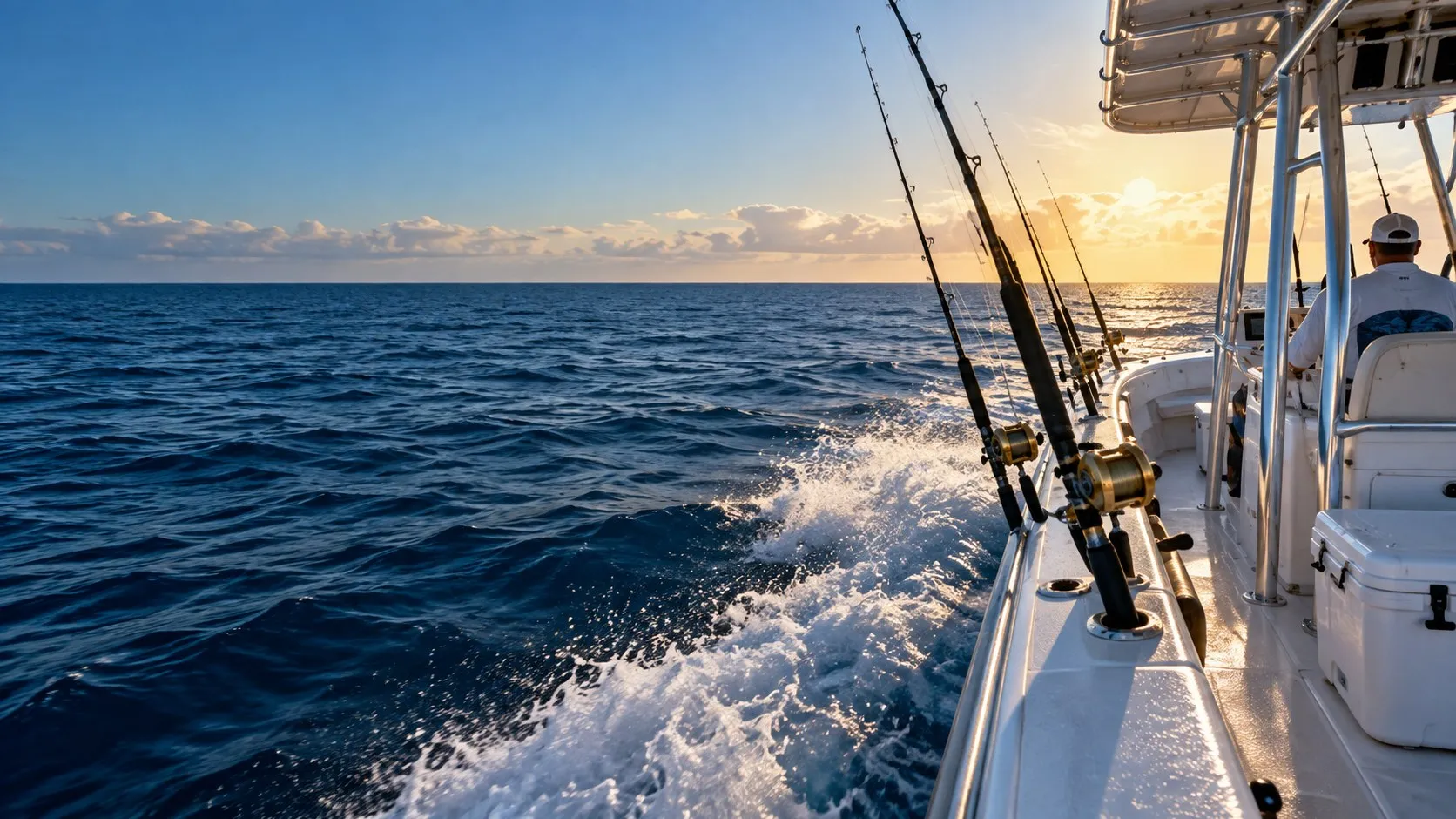
What to pack for a fishing charter out of Gulf Shores, what the boat already supplies, and the few things people most often wish they had brought.
What do you need to bring on a Gulf Shores fishing charter?
Sun protection, more water than you expect to drink, food, a hat and polarised sunglasses, grippy closed shoes, and a cooler for the fillets. The boat supplies rods, tackle and bait. Seasickness medication needs taking before departure, not after you feel unwell.
The three things people actually get wrong
After enough mornings on a party boat rail you stop seeing a hundred
different mistakes and start seeing the same three. People underestimate
the sun. People bring nothing to drink. And people arrive with no way to
get fillets home. Everything below is downstream of those three.
What the boat almost certainly supplies
Rods, reels, terminal tackle, bait, ice for the catch, and the license
coverage that applies to the vessel. This is the core of what you are
paying for and it is why charter fishing is accessible to people who own no
equipment at all. Confirm specifics with your operator — it varies, and
this guide will not guess at any one boat's inclusions.
Something worth understanding about how that works, because it changes
what you should pack. The tackle is not a courtesy — it is the boat's
tackle, chosen for the boat's fishing, and it is set up the way the crew
want it set up. On the boats I fished, the rods came out of the rack
already rigged, the mate set the drags, and the bait was whatever they had
bought that morning. You were not consulted and there was no reason you
should have been.
Which means the honest answer to "what bait will we be using" is that the
crew decide on the day, based on what they have and what is working. It is
a reasonable question to ask when you book, and a pointless one to have an
opinion about. What the fish here actually eat is a separate and
checkable question — the species guide quotes
the published diet for each one.
The one place this affects your packing is if you own a rod you love. Ask
before you bring it. Some operators would rather you did not, deck space
on a busy boat is genuinely tight, and a rod that does not match the
fishing is worse than the one they will hand you.
The licensing point is the one most worth checking rather than assuming,
because it is the only item on the list with a legal consequence. How it
works, and where the state publishes the current position, is on
the licence page — the rules there come
from Outdoor Alabama — Saltwater Recreational Licenses, not from this site.
Sun, seriously
This is the item people underestimate most, and the reason it goes first.
On the water you are getting direct sun plus reflection off the surface,
for hours, with almost no shade on a fishing boat. A morning that felt fine
on the beach is a different exposure entirely eight hours offshore.
Long sleeves — a light sun shirt beats reapplying sunscreen to your arms all day.
High-SPF sunscreen, applied before you board and reapplied. Include the backs of your hands, your ears and the back of your neck.
A hat that survives wind. A brim without a strap ends up in the Gulf.
Polarised sunglasses. They cut glare off the water, which matters for comfort and for actually seeing what you are doing.
Something for your lips and the tops of your ears. Both catch reflected light all day and both get missed.
The burn I remember worst came on an overcast day, which is the trap. Cloud
cover feels like protection and is not — you are still getting hours of
light off the water, and you do not notice until you are back on the dock.
Water and food
Bring more water than seems reasonable. Heat plus sun plus salt air
dehydrates you faster than you notice, and dehydration makes seasickness
substantially worse — the two problems compound. Food is generally your own
responsibility; something plain travels better than something rich if the
sea is up.
Seasickness, handled properly
The mistake is treating it as something to deal with if it happens. Most
remedies are preventive and need to be in your system before you leave the
dock. If you have never been offshore, you do not know how you react, and
a long trip is a bad place to find out — see
full-day charters on why nobody gets off
early, and inshore fishing for the calmer
alternative.
One more thing worth knowing: if it does catch you, the worst place to be
is below deck. Stay outside, keep your eyes on the horizon, and stay in the
air. Going into the cabin to lie down feels like the right instinct and
makes it worse.
Clothing and footwear
Closed shoes with grip. Decks get wet and slick, and a deck with fish on it is worse. Flip-flops are a poor idea and open toes near a gaff are a worse one.
A light waterproof layer. Spray on the run out is normal even on a good day.
A change of clothes in the car. You will smell of fish and salt.
For the catch
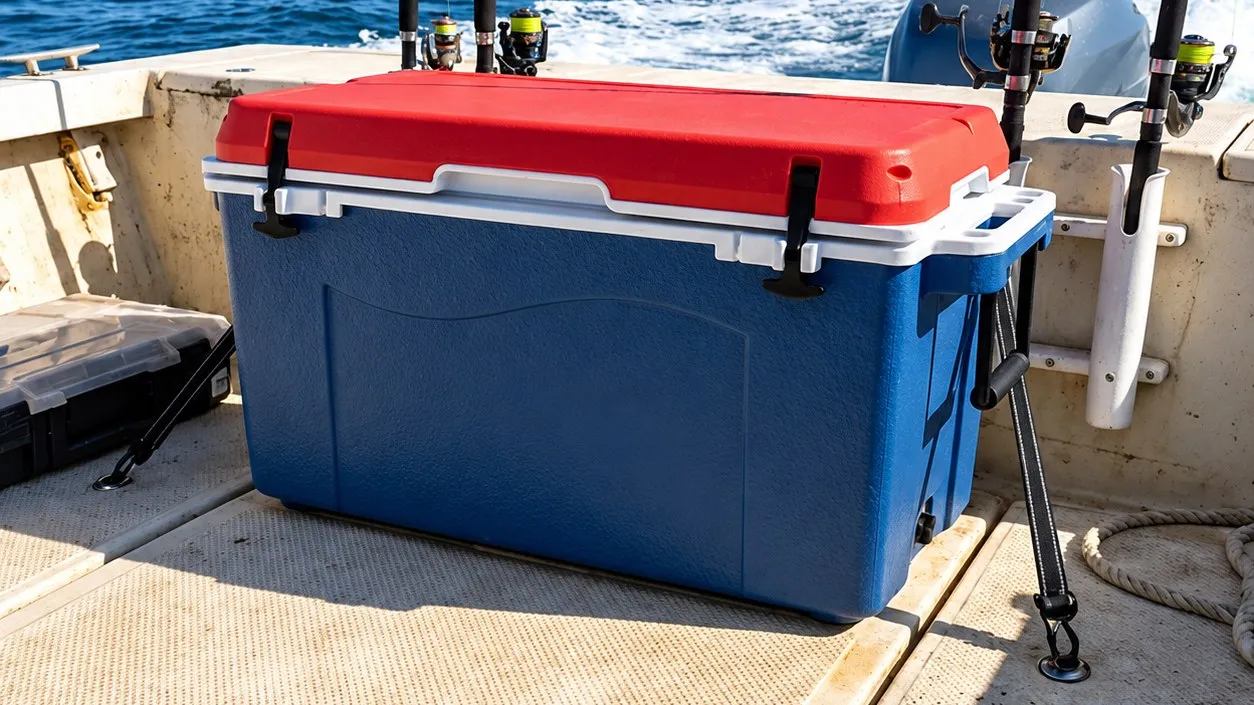
A cooler, in the car, with the ice you will want later. The crew clean and
fillet at the dock and hand you bags — see
what to expect — and those bags need to stay
cold on the drive back. This is the most commonly forgotten item on the
entire list.
This is the one I would put in bold if I could only keep one line. The
cooler stays in the car, and you will be very glad of it at the cleaning
table when somebody hands you bags of fillets and a long drive home.
What to leave behind
Anything you would be upset to lose overboard, phones included.
Hard-sided luggage or large bags — deck space is limited, especially on a shared boat.
Glass containers, which many operators do not allow.
Bananas, if your captain is superstitious about them. Many are, and it costs you nothing to humour it.
The gear this page is talking about
Grouped the way the page is: the two things that ruin a trip if ignored, then the things that make a long day on open water bearable. Most of it you may already own.
[SLOT: image — card 4 / 3]Motion sickness tabletsProduct image. Owner-supplied or from the affiliate feed — never a manufacturer render passed off as a photograph of the item in use.
Motion sickness tablets — demo listing
Taken the night before and again in the morning, not when you already feel it. By the time you feel it on a boat, swallowing anything is the hard part.
Placeholder listing — no affiliate programme is in place yet.
[SLOT: image — card 4 / 3]Acupressure wrist bandsProduct image. Owner-supplied or from the affiliate feed — never a manufacturer render passed off as a photograph of the item in use.
Acupressure wrist bands — demo listing
Drug-free, so they suit people who cannot take the tablets or do not want to be drowsy. Opinions on how well they work vary widely and this site takes no position on it.
Placeholder listing — no affiliate programme is in place yet.
[SLOT: image — card 4 / 3]Long-sleeve sun shirtProduct image. Owner-supplied or from the affiliate feed — never a manufacturer render passed off as a photograph of the item in use.
Long-sleeve sun shirt — demo listing
A hooded long-sleeve shirt does more than sunscreen over a full day because it does not wear off, sweat off, or need reapplying with fish-slimed hands.
Placeholder listing — no affiliate programme is in place yet.
[SLOT: image — card 4 / 3]Polarized sunglassesProduct image. Owner-supplied or from the affiliate feed — never a manufacturer render passed off as a photograph of the item in use.
Polarized sunglasses — demo listing
Polarization cuts the glare coming off the surface, which matters for your eyes over eight hours and for seeing anything in the water at all. Bring a retainer strap.
Placeholder listing — no affiliate programme is in place yet.
[SLOT: image — card 4 / 3]Reef-safe sunscreenProduct image. Owner-supplied or from the affiliate feed — never a manufacturer render passed off as a photograph of the item in use.
Reef-safe sunscreen — demo listing
Mineral rather than chemical filters. Worth noting that "reef safe" is not a regulated term in the United States, so it describes the formulation rather than certifying anything.
Placeholder listing — no affiliate programme is in place yet.
[SLOT: image — card 4 / 3]Non-marking deck shoesProduct image. Owner-supplied or from the affiliate feed — never a manufacturer render passed off as a photograph of the item in use.
Non-marking deck shoes — demo listing
Closed-toe, non-marking soles. Some boats ask for non-marking specifically; a wet fibreglass deck is the reason the rest of the requirement exists.
Placeholder listing — no affiliate programme is in place yet.
[SLOT: image — card 4 / 3]Dry bagProduct image. Owner-supplied or from the affiliate feed — never a manufacturer render passed off as a photograph of the item in use.
Dry bag — demo listing
Phone, keys, wallet, medication. Spray reaches further across a deck than people expect, and there is nowhere dry to put anything on most boats.
Placeholder listing — no affiliate programme is in place yet.
Packing questions
What tackle does the boat provide?
On a charter, essentially all of it: rod, reel, terminal tackle and bait, matched to the fishing that boat does. That is the core of what the ticket buys and it is why charter fishing is open to people who own no equipment. Confirm the specifics with your operator, because inclusions vary.
What bait do charter boats use?
The crew decide, and they decide on the day based on what they have and what is working. Bait is normally included in the trip. This guide does not publish a bait list for Gulf Shores boats because no operator publishes one and guessing would be worse than saying nothing.
Do you need to bring your own rod?
No. Rods, reels, terminal tackle and bait are normally supplied, and the boat's gear is matched to the fishing. Experienced anglers sometimes bring a favourite rod, but check first — some operators would rather you did not, and space on a crowded boat is limited.
Can you bring food and drink?
Usually yes, and on most trips you are expected to. Bring more water than you think you need; dehydration on a hot boat makes seasickness worse and is the most common avoidable problem of the day. Ask about alcohol policy, which differs by operator.
What should you wear?
Light long sleeves rather than a t-shirt, a hat that stays on in wind, polarised sunglasses, and non-marking closed shoes with grip. The sun on the water is much stronger than on the beach, and there is rarely shade on a fishing boat.
Do you need a cooler?
If you intend to keep fish, yes. The crew hand you fillets at the end, and those need to get back to your accommodation cold. Some operators supply or sell ice; a cooler in the car is the simplest solution and one people routinely forget.
When should you take seasickness medication?
Before you feel unwell, which for most over-the-counter options means the night before or at least an hour before departure. Taken after symptoms start it does very little. If you have never been offshore, assume you might need it rather than finding out.
Next step
Looking for fishing trips in Gulf Shores or Orange Beach?
Fishing Charters Gulf Shores is an independent guide — no boats, no bookings, nothing to sell. It exists so you can ask better questions before you hand an operator a deposit.